1. Hedging and the Role of the JETP
The term “hedging” was introduced into international relations scholarship in the 1990s to describe a strategy situated between balancing and bandwagoning, combining selective engagement, limited resistance, and partial accommodation (Lake, 1996; Green, 1999; Johnston & Ross, 1999; Medeiros, 2005; Goh, 2005; Kuik, 2008, 2020). The concept was borrowed from the field of finance, where hedging refers to the diversification and balancing of risks through the diversification of positions. In international relations, this strategy is reflected in states’ efforts to maintain simultaneous relationships with multiple major powers rather than aligning exclusively with one side. For ASEAN, hedging is manifested through the maintenance of relations with the United States, China, Russia, Japan, India, and the European Union; the promotion of multilateral dialogue mechanisms; the inclusion of diverse partners; and the avoidance of confrontational rhetoric. This approach enables ASEAN to mitigate strategic risks, expand economic and development benefits, and preserve its central role in the regional architecture.
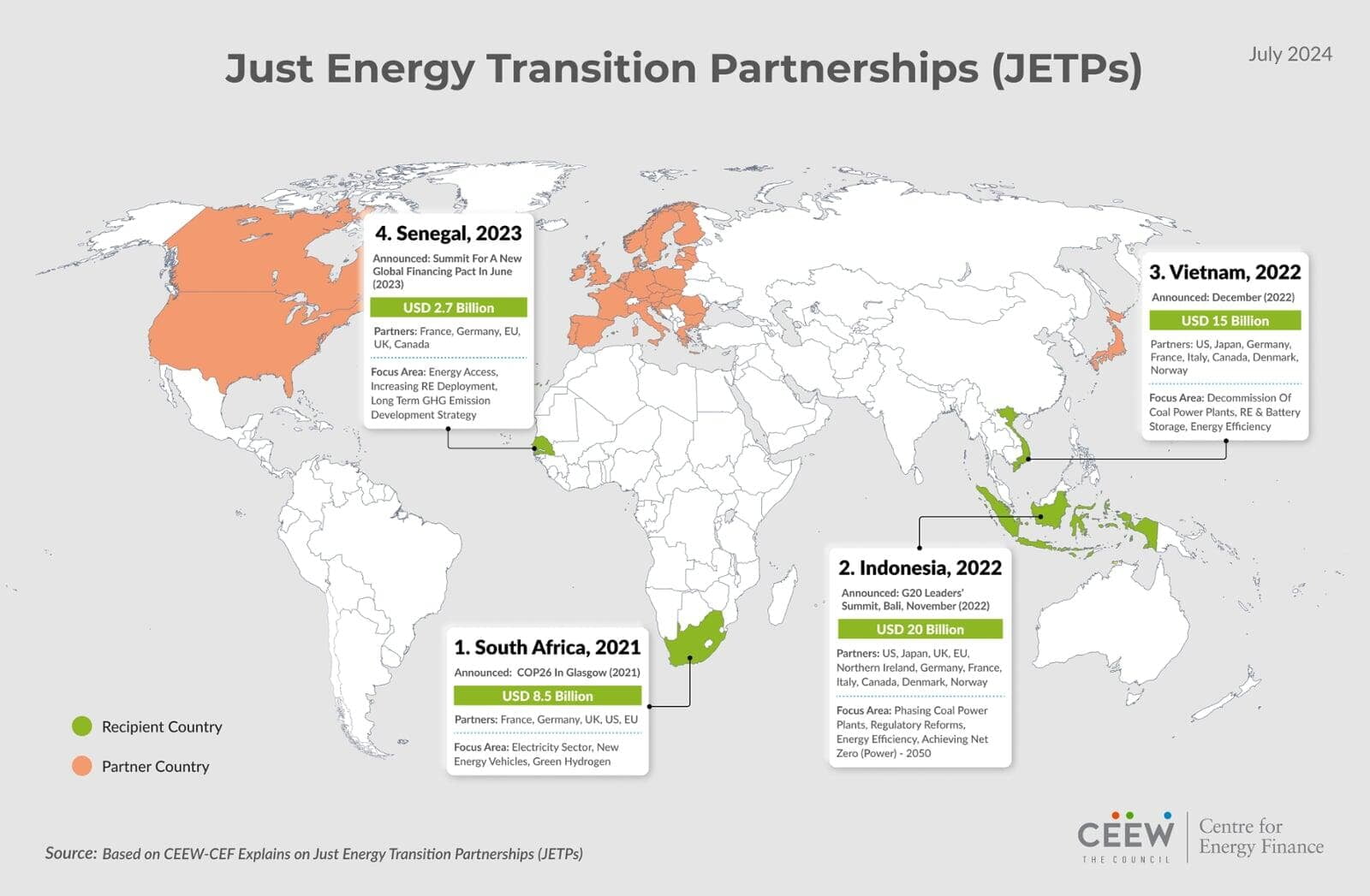
Under a hedging strategy, states do not choose to align exclusively with a single major power. Instead, they diversify their external relations and maintain cooperation with multiple partners in order to distribute risks while maximizing benefits. The Just Energy Transition Partnership (JETP) provides an example of this approach in the field of energy transition. Through the JETP, Vietnam and Indonesia have mobilized resources from multiple international partners, including the United States, Japan, and European countries, to support efforts to reduce dependence on coal and advance the energy transition. The Just Energy Transition Partnership (JETP) is a cooperation mechanism between developing countries and a group of international partners aimed at mobilizing financing, technology, and policy support for the energy transition, particularly the reduction of coal dependence and the promotion of a just transition. In ASEAN, Indonesia and Vietnam established JETPs with the International Partners Group (IPG) in 2022, with initial financial commitments of USD 20 billion and USD 15 billion, respectively. These agreements involve multiple partners, including the United States, Japan, European countries, and international financial institutions.
JETP is not merely a financial mechanism for the energy transition; it also creates a multi-partner cooperation framework that enables Vietnam and Indonesia to access resources from multiple actors without becoming entirely dependent on any single country. Maintaining simultaneous cooperation with the United States, Japan, and European countries through JETP demonstrates an approach based on partner diversification in a strategically significant sector such as energy. Therefore, JETP can be regarded as a concrete manifestation of hedging in the field of energy transition: by maintaining and diversifying relations with multiple partners, ASEAN Member States can expand the resources available for development while reducing the risks associated with dependence on a single partner.
2. Hedging and Partner Diversification in the Energy Transition: The Cases of Vietnam and Indonesia
Vietnam: Partner Diversification in Renewable Energy Development
Vietnam represents a notable case of using international cooperation to promote the energy transition while maintaining policy autonomy in energy planning. In December 2022, Vietnam and the International Partners Group (IPG) established the Just Energy Transition Partnership (JETP). Under the Political Declaration, the partners committed to mobilizing an initial amount of at least USD 15.5 billion over a period of three to five years, including USD 7.75 billion in public finance from the IPG and at least USD 7.75 billion in private finance mobilized through the Glasgow Financial Alliance for Net Zero (GFANZ). The IPG comprises the European Union, the United Kingdom, France, Germany, the United States, Italy, Canada, Japan, Norway, and Denmark.
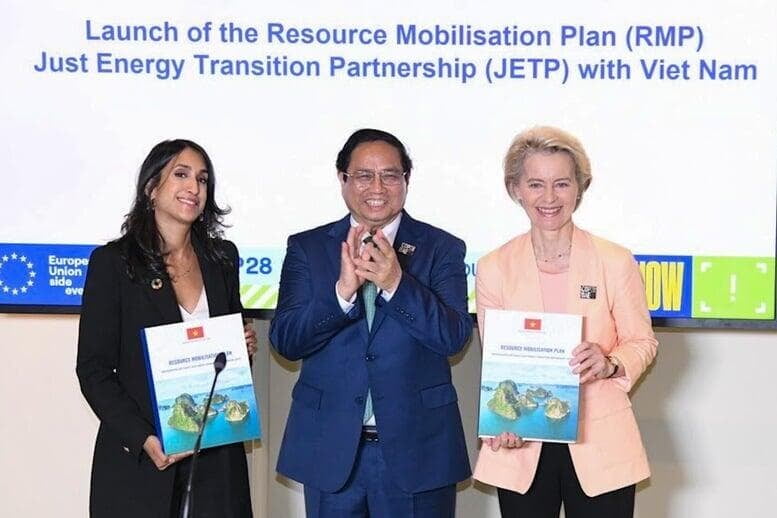
Vietnam’s JETP pursues multiple objectives simultaneously, including reducing emissions from the power sector, limiting dependence on fossil fuels, expanding renewable energy, and mobilizing resources for the energy transition. The JETP Political Declaration sets a target of increasing the share of renewable energy to at least 47% by 2030, while limiting coal-fired power capacity to 30.2 GW and capping peak power-sector emissions at 170 million tonnes of CO₂ equivalent. The Resource Mobilization Plan also focuses on areas such as offshore wind power, solar power, energy storage systems, electricity grids, and the development of the renewable energy industry.
Rather than relying on a single source of financing or an individual international partner, Vietnam simultaneously accesses public finance, private investment, technical assistance, and technology from multiple partners. The JETP Resource Mobilization Plan is designed with the participation of multiple governments, financial institutions, and international businesses, with public funding expected to play a catalytic role in mobilizing additional private investment. This approach broadens Vietnam’s options in developing renewable energy and reduces the risks associated with dependence on a single source of resources.
Indonesia: Balancing the Renewable Energy Transition with Coal Interests
In contrast to Vietnam, Indonesia’s case more clearly illustrates the balancing between the renewable energy transition and the interests associated with its coal-based energy system. Indonesia and its international partners announced the JETP at the G20 Summit in Bali in 2022, with an initial financial commitment of USD 20 billion. Indonesia’s JETP was designed to support the transformation of the power sector, accelerate renewable energy development, and reduce emissions, while pursuing a just and managed transition away from coal.
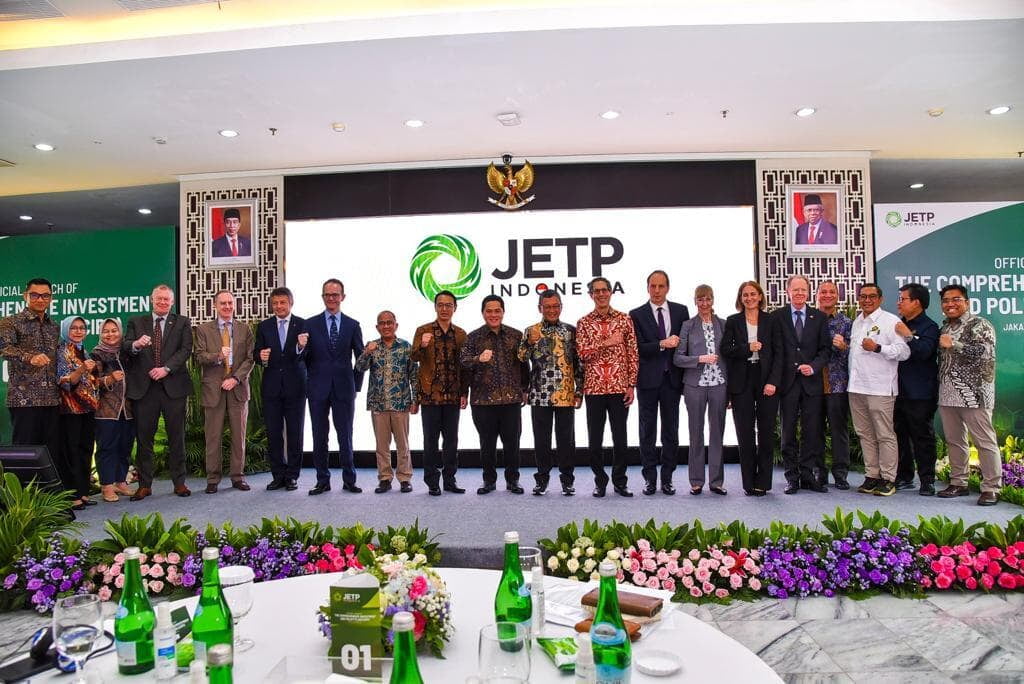
Indonesia’s particularity lies in the significant role of coal in its energy system and economy. Therefore, the country’s energy transition cannot be understood simply as a direct substitution of fossil fuels with renewable energy. The Comprehensive Investment and Policy Plan (CIPP), the foundational document for the implementation of Indonesia’s JETP, recognizes that the transition from coal to clean energy needs to be carefully managed, with the mobilization of substantial financial resources being a critical condition for implementing transition programs. The CIPP also projects that coal-fired power capacity on the grid will continue to increase during the initial phase, reaching a peak before gradually declining from around 2030 onward; from 2035, the number of fossil-fuel power plants being retired is expected to increase.
Indonesia has not opted for an immediate transition pathway but has instead maintained flexibility regarding the timing and modalities of the transition. On the one hand, Indonesia uses the JETP to mobilize international resources for renewable energy development, grid modernization, and the acceleration of coal-fired power plant retirements. On the other hand, it must continue to manage the economic interests and energy security requirements associated with its existing coal-based energy system. The CIPP explicitly identifies a “managed coal phase-out pathway” as one of the key investment areas under the JETP.
Indonesia can therefore be understood as a case that focuses on reconciling and balancing multiple potentially conflicting or competing objectives and interests. While Vietnam is particularly notable for diversifying sources of finance, technology, and international partners, Indonesia more clearly demonstrates the balancing of potentially competing objectives: developing renewable energy, reducing emissions, ensuring energy security, and managing the economic interests associated with coal. This strategy allows Indonesia to avoid having to choose immediately between coal and renewable energy, instead maintaining a phased transition process.
Therefore, the Indonesian case demonstrates that hedging is not implemented solely through the diversification of relationships with international partners, but also through the preservation of multiple domestic policy options, particularly with regard to the pace of the transition from coal to renewable energy.
3. Opportunities and Challenges for ASEAN Member States
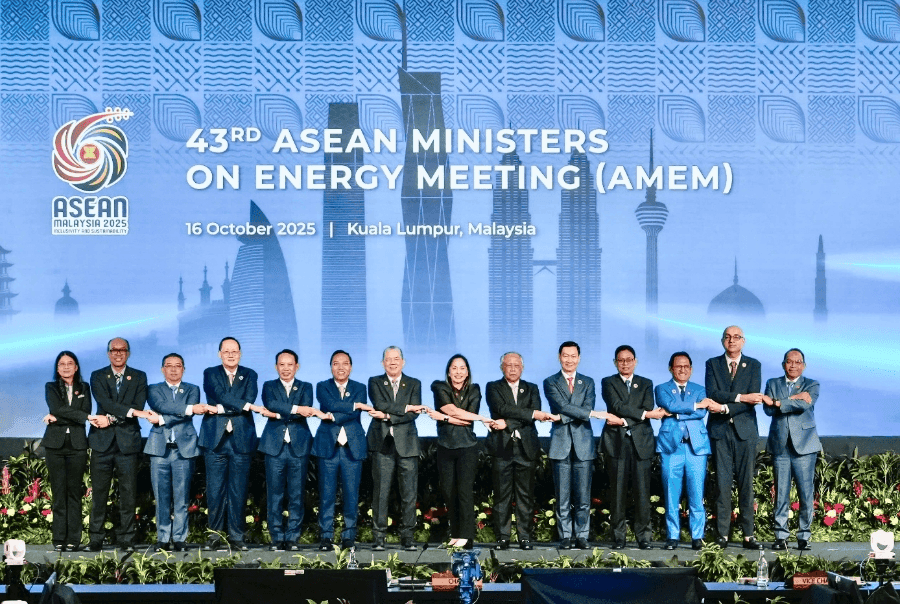
In the field of renewable energy, hedging provides ASEAN Member States with opportunities to simultaneously access capital, technology, and markets from multiple external partners rather than becoming dependent on a single major power. As ASEAN’s energy demand continues to increase, the transition toward renewable energy can enable countries to diversify their energy supplies and strengthen energy security, while also expanding opportunities for cooperation with China, the United States, Japan, the Republic of Korea, and the European Union. According to the 8th ASEAN Energy Outlook, renewable energy accounted for only 15.6% of ASEAN’s total primary energy supply in 2022, compared with the regional target of 23%. Consequently, the need for capital, technology, and international cooperation remains substantial.
However, this strategy also presents significant challenges. ASEAN Member States still require substantial investment for the energy transition: the ASEAN Centre for Energy (ACE) estimates that the region may require approximately USD 3.7–6.7 trillion by 2050, depending on the transition scenario. Renewable energy markets across ASEAN remain institutionally fragmented, with differences in investment regulations and electricity pricing mechanisms, while high investment risks may constrain private capital flows. Reliance on multiple partners also creates risks associated with disruptions or changes in partners’ commitments. For example, the United States’ withdrawal from the JETP for Indonesia and Vietnam in 2025 illustrates how external resources can change in response to the policy priorities of individual governments, requiring recipient countries to seek alternative sources of financing.
In the renewable energy sector, differences in the degree of dependence on, and choice of, external partners among ASEAN Member States clearly reflect the diversification dimension of hedging. While some countries have strengthened cooperation with China in terms of financing and technology, others have sought resources from Japan, the Republic of Korea, the European Union, or the United States. This approach enables individual countries to diversify risks and expand their policy options, but it may also lead to differences in technological standards, financing mechanisms, and energy policy orientations. Therefore, the challenge for ASEAN lies not in selecting a common partner, but in its ability to coordinate diverse partnerships through regional mechanisms, thereby maintaining ASEAN’s strategic autonomy and centrality in the energy transition.
REFERENCES
Hoàng Thị Tuấn Oanh, PhD, and Hoàng Thanh Tâm, MA. “Models Adopted by Middle and Small States in Responding to Great-Power Competition.” Political Theory Journal. https://lyluanchinhtri.vn/cac-mo-hinh-cua-cac-nuoc-tam-trung-va-nuoc-nho-ung-pho-canh-tranh-nuoc-lon-13733.html
Kuik, C.-C. (2021). “Getting Hedging Right: A Small-State Perspective.” China International Strategy Review, 3, 300–315.
Nguyễn Thu Hà, PhD. (30 March 2026). “ASEAN in the Context of Global Polarization: From Traditional Neutrality to Selective Neutrality.” Political Science Information. http://khoahocchinhtri.hcma.vn/Content/asean-trong-boi-canh-phan-cuc-toan-cau-tu-trung-lap-truyen-thong-den-trung-lap-chon-loc-84010
Encyclopaedia Britannica. “Biofuel.” https://www.britannica.com/technology/biofuel
Phong Sơn. (10 June 2026). “ASEAN and Energy Security in the New Context.” PetroTimes – Magazine of the Vietnam Petroleum Association. https://petrotimes.vn/asean-va-van-de-an-ninh-nang-luong-trong-boi-canh-moi-742121.html
Tim Cocks et al. (7 March 2025). “US Withdraws from Plan to Help Major Global Polluters Move from Coal.” Reuters. https://www.reuters.com/sustainability/climate-energy/us-withdrawing-plan-help-major-polluters-move-coal-sources-2025-03-05/
UK Government. Political Declaration on Establishing the Just Energy Transition Partnership with Viet Nam. 14 December 2022. https://www.gov.uk/government/publications/vietnams-just-energy-transition-partnership-political-declaration/political-declaration-on-establishing-the-just-energy-transition-partnership-with-viet-nam
European External Action Service (EEAS). Launch of the Resource Mobilisation Plan for the Just Energy Transition Partnership with Viet Nam. 1 December 2023. https://www.eeas.europa.eu/jetp-rmp-launch_en
European External Action Service (EEAS). Launch of the Resource Mobilisation Plan for the Just Energy Transition Partnership with Viet Nam. 1 December 2023. https://www.eeas.europa.eu/jetp-rmp-launch_en
Government of Indonesia & International Partners Group. Comprehensive Investment and Policy Plan (CIPP). 2023. https://pathways.rmi.org/pathway/JETP-CIPP-2023
ASEAN Centre for Energy (ACE). The 8th ASEAN Energy Outlook. 2024. https://aseanenergy.org/publications/the-8th-asean-energy-outlook/ASEAN Centre for Energy (ACE). ASEAN Capacity Building Roadmap on Energy Investment 2025. 2025. https://aseanenergy.org/publications/asean-capacity-building-roadmap-on-energy-investment-2025
ASEAN Centre for Energy (ACE). Accelerating Clean Energy Investment in ASEAN: Policy Options. 2024. https://aseanenergy.org/publications/accelerating-clean-energy-investment-in-asean-policy-options/
Zainab Malaika. “ASEAN Needs a Hedging Code, Not Just Hedging Instincts.” Modern Diplomacy, 9 July 2026. https://moderndiplomacy.eu/2026/07/09/asean-needs-a-hedging-code-not-just-hedging-instincts/